Gramsci developed the idea of 'cultural hegemony'. This is the idea that one social class within a culture dominates society, therefore making their views and values acceptable and 'normal' behaviour. Gramsci believes hegemony is constantly causing problems within societies arguing what is actually a 'normal' way of life. For example, this arguing is shown through negative and positive representation of youths from different classes, most commonly underclass. The typical structure of a film, particularly 'hoodie horror' opens with a 'normal' way of life, which is then disrupted by something that goes against this normality. We see one point of view in Attack the Block, where we see the underclass youths as heroes. From this film about youths, we can see how society argues about what is a normal way of life.
Moreover, this means that low social classes will always be shown as negative as they are unable to have the same lifestyle as middle class people. This would effect representations as all representations of youth will always be contrasted with middle class youths. therefore meaning that if the lower class youths are not living up to the standard of the middle class youths then they will always be looked down upon withing society. By looking at this theory, we are able to see that the media always still with the hegemony of the higher classes as these are seen as more acceptable. Also, it further represents how they do not take into consideration how other people live in society.
In conclusion, this displays how the competition of class value will always create tension and inevitably end up with lower class youths acting out violently. This may express how due to the separation between classes in society, people do not understand each other or why they might act the way they do, which strongly relates to how the media has represented youths as 'monster's due to the fact that they do not know what it is like to be a teenager in this generation. Overall, in order for the class tension to disappear, people need to learn and understand each other so youths and adults can get along.
Thursday, 20 October 2016

Acland's theory
Acland's theory describes how the media's representation of young people allows the state to control them. This is known as 'Ideology of protection', which is the idea that youths need to constantly be watched in order for them to be restricted from their 'delinquent behaviour'. It is deemed that as teenager are at a very significant point in their lives as youths, they need to learn the correct social roles and values according to adults before continuing in life. These will be reinforced and confirmed by the state as at this age, teenagers views are very influential and so Acland's theory displays how they need to be influenced in the correct way in order for their 'unacceptable behaviour to stop.
This therefore effects the representation of youths as they are all seen as being reckless by adults who have to keep enforcing that their actions are bad. Moreover, this displays the hegemony of how these youths should not behave when they reach adulthood and teaches them that they have to grow up and understand the consequences that their actions have. Therefore, widely negative stories have been published in the media to express to the youths the damage that they are causing society which is intended to influence them into behaving better. For example, the idea in 'hoodie horrors' that youths are like monsters often included in horror themes leads some youths to relate these representations to things they fear, such as demons, which moves them in the opposite direction of this sort of behaviour. Furthermore, the media creates a 'normal image' of youths and adults, then contrasting this with behaviour that contrasts against what we deem to be socially acceptable. this is what the audience finds entertaining and interesting, as it is going against these 'normal' views of society.
In conclusion, Acland's theory informs and explains how the state believes controlling youths and pressuring them into seeing how their behaviour is bad, will enable them to control and restrict them from the 'monstrous' stereotype that has been created of them. Moreover, by looking at this theory I have been able to understand and build knowledge on how teenagers have been exploited into believing everything they do is unacceptable and wrong.
Giroux's theory
Giroux has been an important contributor to a variety of academic fields, including critical pedagogy, cultural studies, youth studies, and media studies. Giroux's views show how the youth are mistreated within the media. He describes the media's representation of youths as an 'empty category' which suggests that adults do not really understand what it is like to be a youth in this generation. Because of this, the media puts their own ideas into this 'empty space' of what they believe the representation of youth this. Therefore with the media involving only adults, the representations are widely affected as adults do not want their generation to look bad so instead use teenagers as a scapegoat to blame the issues actually caused by themselves.
By looking at this theory we are able to see that the representation of youth is molded together through what adults believe and think rather than the reality of what teenagers are like. This then leads to the uprising stereotypes through the media, which has been the cause of moral panic spreading as adults do not know how to control this new youth behaviour. However, this has just been created through hegemony and the media pouring down their ideas onto adults and leading them to believe that teenagers are people to be afraid of and that they are monsters, when the reality is that they are just misunderstood. He see's the abandonment of youth in the neoliberal economy as a critical indicator of the new authoritarianism that has accompanied this project. He also advocates a re-commitment to community development and learning for social justice, equality and democracy.
In conclusion, by looking at Giroux's theory I have been able to develop my understanding of how the media represent the 'new generation' of youth culture negatively in order to create a stereotype of teenagers. This prejudice displays how not only have the media created this 'monstrous' image of youths, but they have also led adults to believe that they are the cause of all issues that arise in the media. However, in reality these issues have previously been caused by adults who now have someone to put the blame on other than themselves and so protect their own generations image. Moreover, the media's representation have imprinted the idea that all youth's are violent and dangerous with no exception to this stereotype. In this sense, teenagers who may challenge this stereotype are victimised and judged straight away without anyone actually taking the time to understand and get to know them.
Tuesday, 11 October 2016
Who is my target audience?
The target audience for my music video are 16-20 year old's of both genders, but mostly male. The reason for this is that it will reflect gang culture, all of which are mostly male, while relating to the fact that I will only have males in my video.
I have reached the decision of this age and gender to be the audience for my music video due to my production research so far on the films 'Straight outta Compton' and 'Brotherhood'. Both these films reflect similar themes and views, although you could argue 'Brotherhood' is a much more modern display of youth culture and focuses on the more humorous side of things. Through looking at these similar films who hold the same concept and ideas as I want to portray in my own music video, I have been able to direct my audience to almost the same as the directors have decided to.
The type of audience I expect to watch my music video are males who may listen to the same grime/rap genre as the song I have chosen and who relate to the cast I will choose to put into my music video. They may wear or share interest in the clothing and props I am going to have my cast use of black hoodies, ripped jeans and jewelry/hats. In this sense, I am to purposefully deciding my cast, costume and props based on what I know will relate to my target audience. Furthermore, another reason why I chose the song 'Young fire old flame' by Wretch 32 is because I knew it would relate and encourage my audience to watch my music video.
In conclusion, by looking at my target audience, I have been able to understand what and what not I need to include in my music video in order to make sure I direct the correct audience in the right way. I have done this through my production research so far, which in being so similar to what I hope to achieve, has developed my knowledge and understanding of key themes, ideas and views I need to include. Therefore I have been able to ensure what I need to continue throughout my pre-production in order to achieve the correct impact at the end of my music video.

Brotherhood
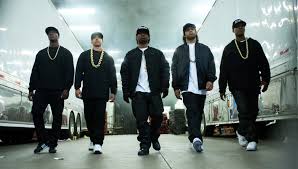
One of the key influences I have had for the idea of my music video to be based around the grime/rap genre is the film 'Brotherhood'. This is a spin off from the previous 'Kidulthood' and 'Adulthood' films that were written, directed and starred by Noel Clarke. With its theme of former gang members coming to terms with the ramifications of their decisions as teenagers, this is the most mature and thought-provoking of Noel Clarke's urban drama series. Clarke delivers a powerfully downbeat turn as Sam Peel, a man who stands to lose everything because of one single violent act a lifetime ago. The film stars the UK's main grime artist 'Stormzy' (real name Michael Omari), who fundamentally represents the youth culture in London and the rest of Britain at present time as the grime/rap genre has become more and more popular. This is one of the main reasons why I have chosen this genre as I know that it will relate and encompass what most teenagers are listening to as more people have gotten into the grime/rap culture.
The film relates to the themes of gang culture and the stereotypical view of youth culture that has been represented through the media. This is due to the gang in the film following the themes of violence/drugs/sex as being all that these teenagers are interested in. My music video links to this as it is the message which I wish to bring across by the end of the production as I am aiming for it to have this impact on the viewer. Furthermore, the audience of this film is targeted to a similar audience as my music video will be aimed towards (16-20 yr old, mostly males but females also). In this sense, I will be able to ensure that I am directing the correct audience through the right way by looking at how the film 'Brotherhood' does this. Therefore, I will be able to build my knowledge and understanding of my own target audience, which will further help with how I will gain primary and secondary research.
In conclusion, by looking at the film 'Brotherhood', I have been able to further my understanding and knowledge of the genre of my music video and how I should target the correct audience. This has enabled me to think about which themes that occur in the film that I will continue throughout my music video in order to engage the rap/grime genre that I have chosen. I have attached a link to the trailer of 'Brotherhood' below:
https://www.youtube.com/watch?v=VlbcqU0Qgr8
Thursday, 6 October 2016
Storyboard
I have attached a picture of the storyboard below to justify my explanation of which shots I will be using and why.
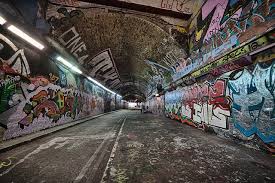
I wish to begin my music video with long shots of the main character looking over a rooftop to a sunset, with the camera panning around and zooming in and out of his face and the sky. Next, I want to show some quicker shots of the different locations I will be using throughout the music video. For example, a long distance shot of a dark alleyway, the underground graffitied tunnel I will be using and the bin that I will build a fire in before it is lit. These shots will be shown throughout the intro to the song before the lyrics and main beat begins.
As the main section of the song begins, the other characters I am going to present with the main character will immerge from the different locations I have mentioned above (alleyway and underground tunnel). I will mainly focus on the main character on the rooftop miming the lyrics before switching back and forth the different locations where the other characters will also be miming the lyrics together. Further on, another location will be presented as all the characters gather around a car. As the song reaches its fast beat, the fire I mentioned before will be lit by the main character, representing the symbolism of the whole song. Close-up shots will be used of the characters costumes as well, for example to display the jewelry, tattoos, hats and hoodies they will have. This will aid in building up the image of the characters towards the viewer in order for them to understand the characters themselves.
When the song begins to come to a close, I will use similar shots to the beginning of the song for chronological purposes and to ensure that it all links together. The only difference with these shots however will be that it will display the characters walking away into the distance in the different locations I have chosen (alleyway, underground tunnel and car). The camera will zoom out as the characters walk the other way as the camera un-focuses and focuses again. The final shots of my music video will include the main character looking out over the rooftop one last time as the sun has eventually gone down. Before the last shot displays the camera first panning around and then zooming into the now dying out fire before the music video ends.
In conclusion, the making of my storyboard has drastically aided in the development and understanding of my music video as I have actually been able to lay out on paper the different scenes and shots I want to achieve. This has been able to ensure I have a solid plan of what I wish to achieve from the production stage of the process while making sure I get the correct impact and effect I wish to have across to the reader.

Monday, 3 October 2016
Camera shot list
I have thought about the different types of shots I wish to include in my music video in order to create the correct impact at each stage of the song.
Beginning of the song:
Long distance shots- Of the sky and sun going down, with the camera un-focusing and then focuses again. My main character looking out over rooftop at the sky, simple shots displaying different settings which I intend to use: underground tunnel, rooftop, fire not yet lit.
Close-up shots- Of the main character's face looking out, tense and thoughtful expression. Newspaper and wood in bin- prepared fire yet to be lit further in the song.
Middle section of the song:
Wide shots- Of other cast members with main character around car, in underground tunnel and on rooftop, each doing different things.
Zoom in- Of the fire being lit and flames going up, these shots will be switched back and forth and blended in with close-ups of the main character and other cast members.
Close-up shots- Of the main character and other cast members expressions, they're costume, jewelry and props I want them to wear. This will give the viewer the stereotypical impression of my cast members and identify the tone and atmosphere of my music video.
Last section of the song:
Long distance shots- Of similar shots to the beginning of the song: sunset and now empty different locations I have used or showing the cast members walking away. This will aid in the chronological series of events and make the beginning link to the end of the music video.
Close-up shots- of the main character looking out over the rooftop again to link to the beginning of the music video, with the camera focusing and un-focusing. Shots of the fire burning out and becoming just smoke to chronologically end the music video and give a sense of closure to the viewer.
Wide shots- camera movement will include panning around the different locations I have used and the characters walking away into the distance while the camera un-focuses and the music fades out as the song ends.
In conclusion, creating a shot list has largely helped me actually envision what my music video will look like when I film it. Moreover, it has helped me in my preparation before going into the production stage as I will physically know what shots I want to get before I go to my location so I do not miss out on any of the key shots I wanted to achieve.



Beginning of the song:
Long distance shots- Of the sky and sun going down, with the camera un-focusing and then focuses again. My main character looking out over rooftop at the sky, simple shots displaying different settings which I intend to use: underground tunnel, rooftop, fire not yet lit.
Close-up shots- Of the main character's face looking out, tense and thoughtful expression. Newspaper and wood in bin- prepared fire yet to be lit further in the song.
Middle section of the song:
Wide shots- Of other cast members with main character around car, in underground tunnel and on rooftop, each doing different things.
Zoom in- Of the fire being lit and flames going up, these shots will be switched back and forth and blended in with close-ups of the main character and other cast members.
Close-up shots- Of the main character and other cast members expressions, they're costume, jewelry and props I want them to wear. This will give the viewer the stereotypical impression of my cast members and identify the tone and atmosphere of my music video.
Last section of the song:
Long distance shots- Of similar shots to the beginning of the song: sunset and now empty different locations I have used or showing the cast members walking away. This will aid in the chronological series of events and make the beginning link to the end of the music video.
Close-up shots- of the main character looking out over the rooftop again to link to the beginning of the music video, with the camera focusing and un-focusing. Shots of the fire burning out and becoming just smoke to chronologically end the music video and give a sense of closure to the viewer.
Wide shots- camera movement will include panning around the different locations I have used and the characters walking away into the distance while the camera un-focuses and the music fades out as the song ends.
In conclusion, creating a shot list has largely helped me actually envision what my music video will look like when I film it. Moreover, it has helped me in my preparation before going into the production stage as I will physically know what shots I want to get before I go to my location so I do not miss out on any of the key shots I wanted to achieve.
Subscribe to:
Posts (Atom)